


.jpg)
A smart contract is a self-executing program that automatically enforces the terms of an agreement when predetermined conditions are met, eliminating the need for intermediaries or manual intervention.
Throughout human history, trade and agreements have been limited by one persistent obstacle: trust. Traditional contracts rely on legal systems, intermediaries, or personal reputation to ensure compliance, creating opportunities for disputes, delays, and breach of agreement. Parties often face uncertainty about whether the other side will honour their commitments, leading to costly verification processes, escrow services, and legal enforcement mechanisms.
Smart contracts address this age-old trust problem by embedding the agreement's terms directly into code that executes automatically on a blockchain network. When specific conditions are met, the contract executes itself without requiring either party to trust the other's intentions or rely on third-party enforcement. This technological solution transforms agreements from trust-based relationships into trustless processes where the outcome is guaranteed by the underlying blockchain infrastructure rather than the goodwill or legal compliance of the involved parties.
Understanding Blockchain Smart Contracts
At its most basic level, a smart contract is a computer programme that automatically executes, controls, or documents legally relevant events according to the terms of a contract or agreement. Think of it as a digital vending machine: you insert the correct amount of money, press a button for your desired item, and the machine automatically dispenses your purchase. No human intervention is required, and the transaction is completed according to pre-programmed rules.
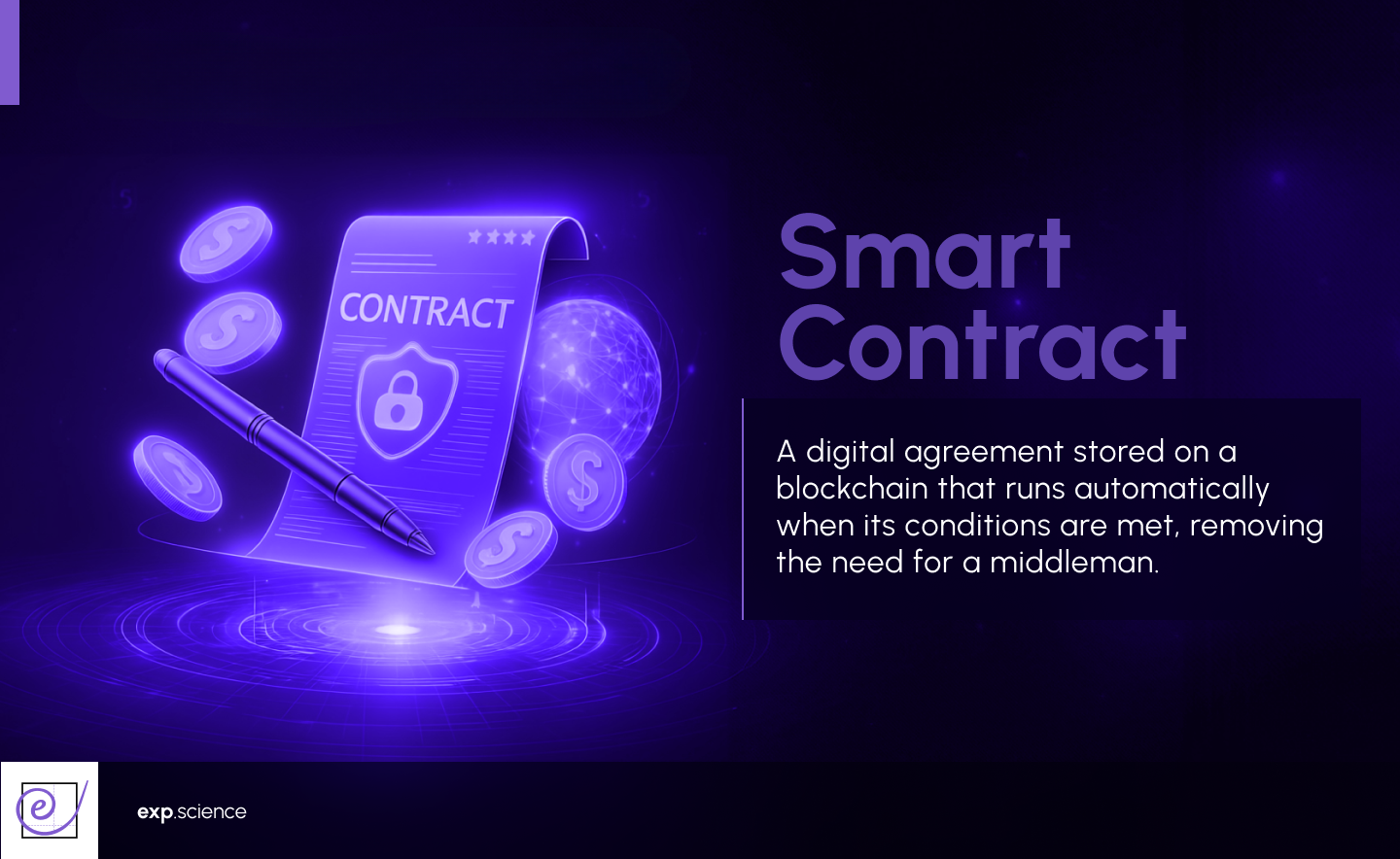
However, smart contracts operate on a far more sophisticated level than vending machines. Smart contracts can handle complex conditional logic, interact with multiple parties, and automatically trigger a series of actions based on predetermined criteria. Imagine a rental agreement that automatically releases keys to a tenant when payment is received, or an insurance policy that immediately pays out claims when weather data confirms a flood has occurred. These scenarios illustrate the power of smart contracts to eliminate intermediaries, reduce costs, and increase efficiency in countless transactions.
The key distinguishing feature of smart contracts is their ability to operate without requiring trust between parties. In traditional contracts, disputes often arise over interpretation or fulfilment of terms, necessitating costly legal proceedings or arbitration. Smart contracts, by contrast, execute automatically and transparently according to their code, making disputes about execution virtually impossible. The agreement's terms are written into lines of code, and the blockchain network ensures these terms are carried out precisely as programmed.
How Smart Contracts Were Created?
The concept of smart contracts predates the blockchain revolution by more than two decades. In 1994, cryptographer and computer scientist Nick Szabo first articulated the idea in his paper ‘Smart Contracts.’ Szabo, who would later become known for his contributions to digital currency theory and is sometimes speculated to be the mysterious Bitcoin creator Satoshi Nakamoto (though he denies this), envisioned contracts that could be embedded in hardware and software in ways that make breach of contract expensive or impossible.
Szabo's original proposal was forward-thinking, writing at the time: ‘A smart contract is a computerised transaction protocol that executes the terms of a contract. The general objectives of smart contract design are to satisfy common contractual conditions, minimise exceptions both malicious and accidental, and minimise the need for trusted intermediaries.’ His vision encompassed not just the technical implementation but also the broader economic and social implications of such systems.
The inspiration for Szabo's work came from observing how certain physical objects already embodied contractual relationships. He often cited the humble vending machine as a primitive ancestor of smart contracts. The machine accepts coins and, via a simple mechanism, dispenses change and products according to the displayed price. The machine effectively implements a contract with its users, and the mechanism gives each party limited access to the other's assets without a trusted third party.
During the 1990s, however, the technological infrastructure necessary to implement Szabo's vision simply didn't exist. The internet was still in its infancy, cryptographic tools were not widely available, and there was no distributed ledger system that could serve as the foundation for truly decentralised smart contracts. Szabo's ideas remained largely theoretical, discussed in academic circles and among cryptography enthusiasts but without practical application.
The emergence of Bitcoin in 2008 marked the first step towards making smart contracts a reality. Satoshi Nakamoto's blockchain provided the missing piece of the puzzle: a distributed, tamper-resistant ledger that could serve as the foundation for automated contract execution. Bitcoin's scripting language did include some smart contract functionality, allowing for basic conditional transactions. However, these capabilities were deliberately limited to maintain network security and simplicity.
What Problem do Smart Contracts Solve?
Throughout history, trade and commerce have been hampered by the problem of trust. When two parties want to engage in an exchange, particularly across distances or between strangers, they face the challenge of ensuring the other party will honour their commitments.
Traditional solutions to this trust problem have typically involved intermediaries: banks, lawyers, escrow services, governments, and other trusted third parties who facilitate transactions and enforce agreements. Whilst these intermediaries serve crucial functions, they also introduce costs, delays, and potential points of failure. They require payment for their services, can be corrupted or compromised, and may not be available or affordable for all participants in the global economy.
Smart contracts propose a radically different solution: replacing human intermediaries with mathematical certainty. Instead of trusting a person or institution to enforce an agreement, parties can trust in the immutable laws of mathematics and cryptography. A properly designed smart contract will execute exactly as programmed, without possibility of fraud, censorship, or arbitrary interference.
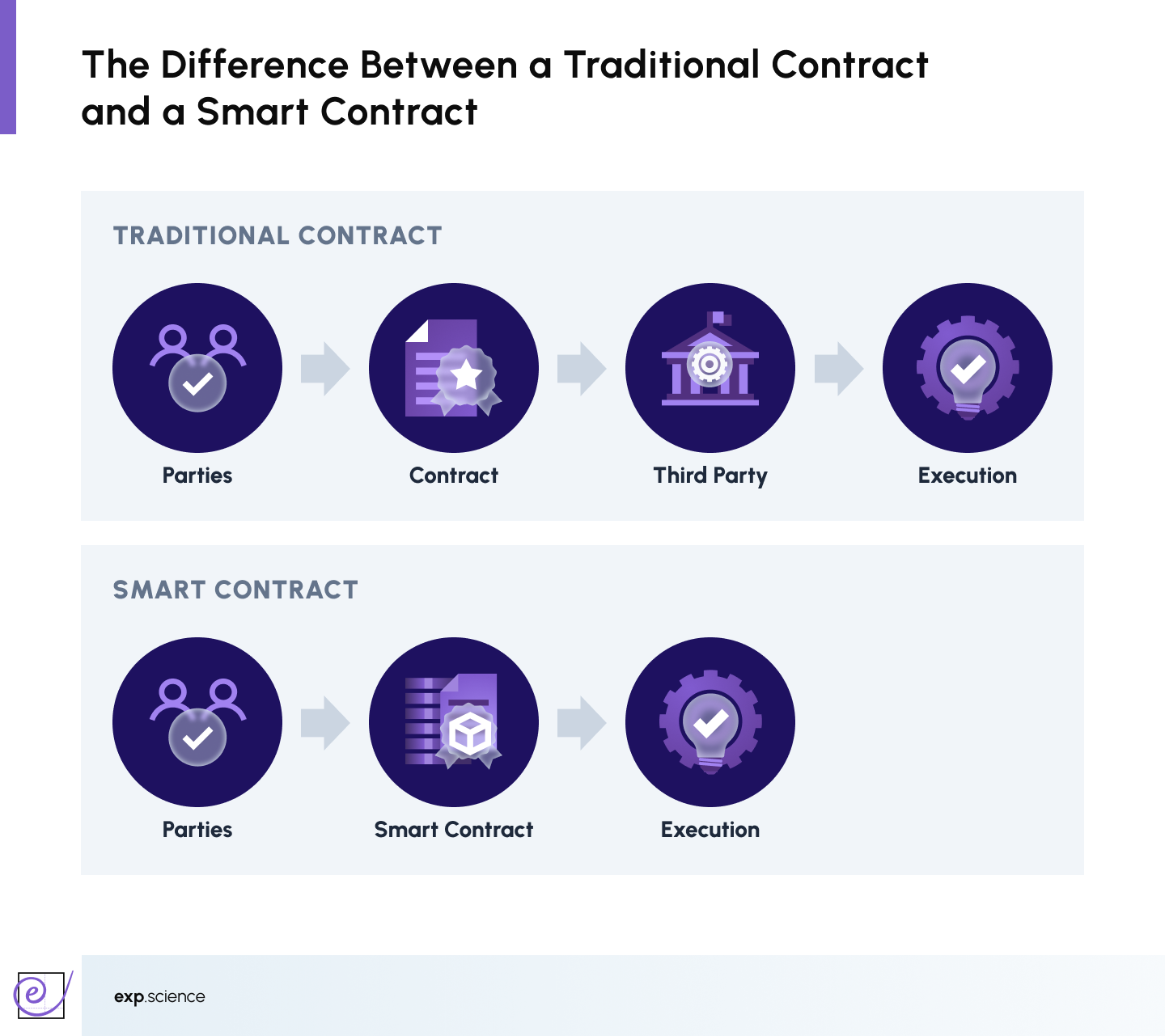
This shift from human-mediated trust to cryptographic trust has profound philosophical implications. It suggests a future where economic relationships can be governed by transparent, predictable rules encoded in software rather than by the potentially arbitrary decisions of human intermediaries. In this vision, contracts become more like physical laws than human agreements, executing with the same inevitability as gravity.
The implications extend beyond mere efficiency gains. Smart contracts promise to democratise access to sophisticated financial services. A farmer in rural Kenya can access the same quality of contract enforcement as a corporation in London, provided they have internet access and understanding of the system. Geographic boundaries and jurisdictional limitations become irrelevant when contracts are enforced by a global, decentralised network.
Furthermore, smart contracts introduce unprecedented transparency to contractual relationships. Unlike traditional contracts, which may be interpreted differently by different parties, smart contract code is public and unambiguous. Anyone can examine the code and understand precisely how the contract will behave under all circumstances. This transparency can reduce disputes and increase confidence in commercial relationships.
The Technical Foundation: How Smart Contracts Work
The technical implementation of smart contracts represents a consolidation of several advanced computer science concepts: distributed systems, cryptography, consensus mechanisms, and programming language design. Understanding how these elements work together is crucial to appreciating both the potential and limitations of smart contract technology.
At its core, a smart contract is a computer programme stored and executed on a blockchain network. Unlike traditional computer programmes that run on individual servers or personal computers, smart contracts run on a distributed network of computers (nodes) that maintain the blockchain. This distributed execution is what gives smart contracts their unique properties of immutability and trustlessness.
When a smart contract is deployed to a blockchain, it becomes part of the permanent record. The contract's code is stored in the blockchain's ledger, and every node in the network maintains a copy. When conditions are met that should trigger the contract's execution, the network processes the contract according to its programmed logic. Because thousands of independent nodes are running the same code and must reach consensus on the result, it becomes practically impossible to manipulate or falsify the contract's execution.
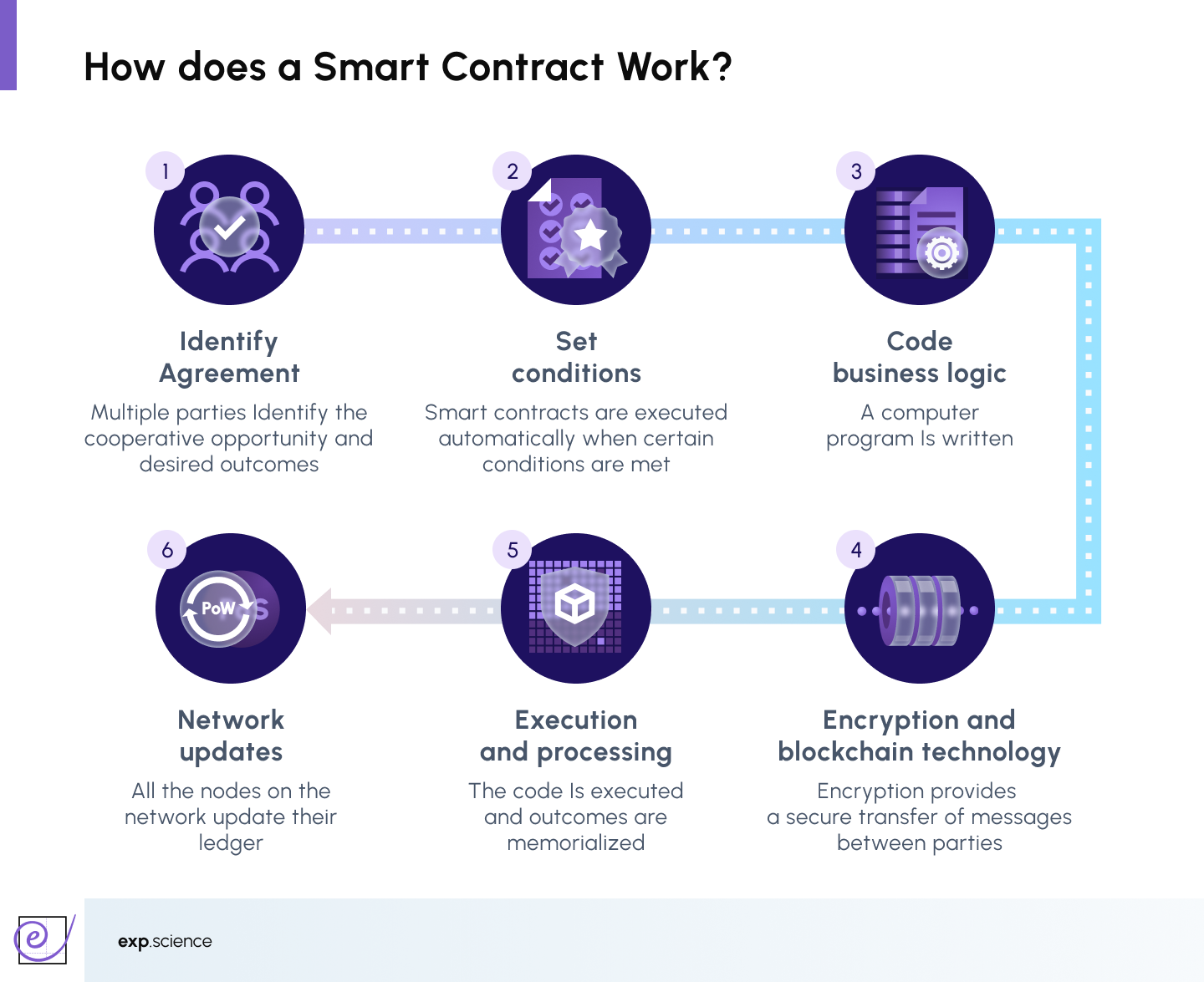
The process begins when someone creates a smart contract by writing code that defines the contract's terms and conditions. This code includes the rules for how the contract should behave, what inputs it accepts, and what actions it should take under various circumstances. The contract is then deployed to the blockchain, where it receives a unique address and becomes available for interaction.
Parties can interact with the smart contract by sending transactions to its blockchain address. These transactions might include data, cryptocurrency, or both. The smart contract processes these inputs according to its programmed logic and executes the appropriate actions. These actions might include transferring funds between parties, updating stored data, or triggering other smart contracts.
The execution of smart contracts requires a mechanism to pay for the computational resources they consume. Different blockchain platforms handle this differently, but Ethereum, the most popular smart contract platform, uses a system called ‘gas.’ Every operation in a smart contract consumes a certain amount of gas, and users must pay for this gas in the platform's native cryptocurrency. This system prevents infinite loops and ensures that the network's resources are used efficiently.
Smart contracts can also interact with the outside world through services called oracles. Since blockchains are isolated systems, they cannot directly access external data such as weather information, stock prices, or sports scores. Oracles serve as bridges between the blockchain and external data sources, allowing smart contracts to react to real-world events. However, oracles also introduce potential points of failure and manipulation, making their design and selection critical to smart contract security.
Why Bitcoin Wasn't the Smart Contract Platform
Bitcoin's scripting language, whilst groundbreaking, was intentionally restricted in its capabilities. Bitcoin was designed as a non-Turing-complete language, meaning it couldn't perform all possible computations. This limitation was a deliberate security feature rather than an oversight. Bitcoin Script can handle basic conditional logic, such as multi-signature transactions or time-locked payments, but it does not support the complex logic required for sophisticated smart contracts.
Several factors contributed to Bitcoin's limited smart contract functionality. Firstly, security was paramount. The simpler the system, the fewer potential vulnerabilities existed. Complex smart contracts introduce numerous attack vectors, and in 2008, the priority was proving that a decentralised digital currency could work at all. Adding complex programmability would have significantly increased the risk of catastrophic bugs or exploits.
Secondly, Bitcoin was designed with a specific use case in mind: peer-to-peer electronic cash. The development community was focused on ensuring Bitcoin could serve as a reliable store of value and medium of exchange. Smart contract functionality, whilst interesting, was not essential to this core mission.
Thirdly, there were practical limitations. Bitcoin's block size and transaction throughput were already constraints on the network's scalability. Adding complex smart contract execution would have exacerbated these limitations, potentially making the network unusable for its primary purpose of transferring value.
The Bitcoin community did experiment with smart contract applications. Coloured coins, for example, attempted to represent other assets on the Bitcoin blockchain, and various escrow and multi-signature schemes provided basic smart contract functionality. However, these applications were clunky, limited, and often required off-chain coordination.
The so-called ‘op code wars’ also contributed to Bitcoin’s limited programmability. In the early years, several opcodes such as OP_CAT and OP_EVAL were disabled after security concerns surfaced, reflecting the community’s preference for safety over programmability. Later debates around opcodes like OP_RETURN and, more recently, OP_CAT and OP_CTV, revealed deep divisions over whether Bitcoin should expand its scripting capabilities or remain minimal to preserve robustness.
The Ethereum Revolution: Making Smart Contracts Mainstream
The true revolution in smart contracts came with the launch of Ethereum in 2015. Co-founded by Vitalik Buterin and a team of developers, Ethereum was designed from the ground up as a ‘world computer’ capable of running arbitrary smart contracts. Unlike Bitcoin, which was primarily designed for value transfers, Ethereum embraced complexity and programmability as core features.
Ethereum's key innovation was the Ethereum Virtual Machine (EVM), a Turing-complete virtual machine that can execute any computation given sufficient resources. This meant that developers could write smart contracts of arbitrary complexity, limited only by the gas costs associated with execution and the constraints of the blockchain environment.
The EVM processes smart contracts written in high-level programming languages such as Solidity, Vyper, or Serpent. These languages are designed specifically for smart contract development and include features that help developers avoid common pitfalls and security vulnerabilities. Solidity, in particular, has become the de facto standard for smart contract development, with syntax similar to JavaScript and features tailored to blockchain applications.
Ethereum also introduced several important concepts that enhanced smart contract functionality. Events allow smart contracts to log information that external applications can monitor, enabling the creation of user interfaces and analytical tools. Libraries enable code reuse and modularity, whilst upgradeable contract patterns allow for limited modifications to deployed contracts. The platform's account system distinguishes between externally owned accounts (controlled by private keys) and contract accounts (controlled by code), enabling sophisticated interactions between users and contracts.
The launch of Ethereum marked the beginning of practical smart contract adoption. For the first time, developers had a platform that could support complex, real-world applications. The platform's flexibility attracted a vibrant ecosystem of developers, entrepreneurs, and researchers who began exploring the possibilities of programmable money and automated agreements. Whilst Ethereum popularised smart contracts, their volatile gas fees can limit adoption. Other platforms emerged to address this, such as Hedera, offering faster, cheaper, and greener options.
Current Use Cases and Applications
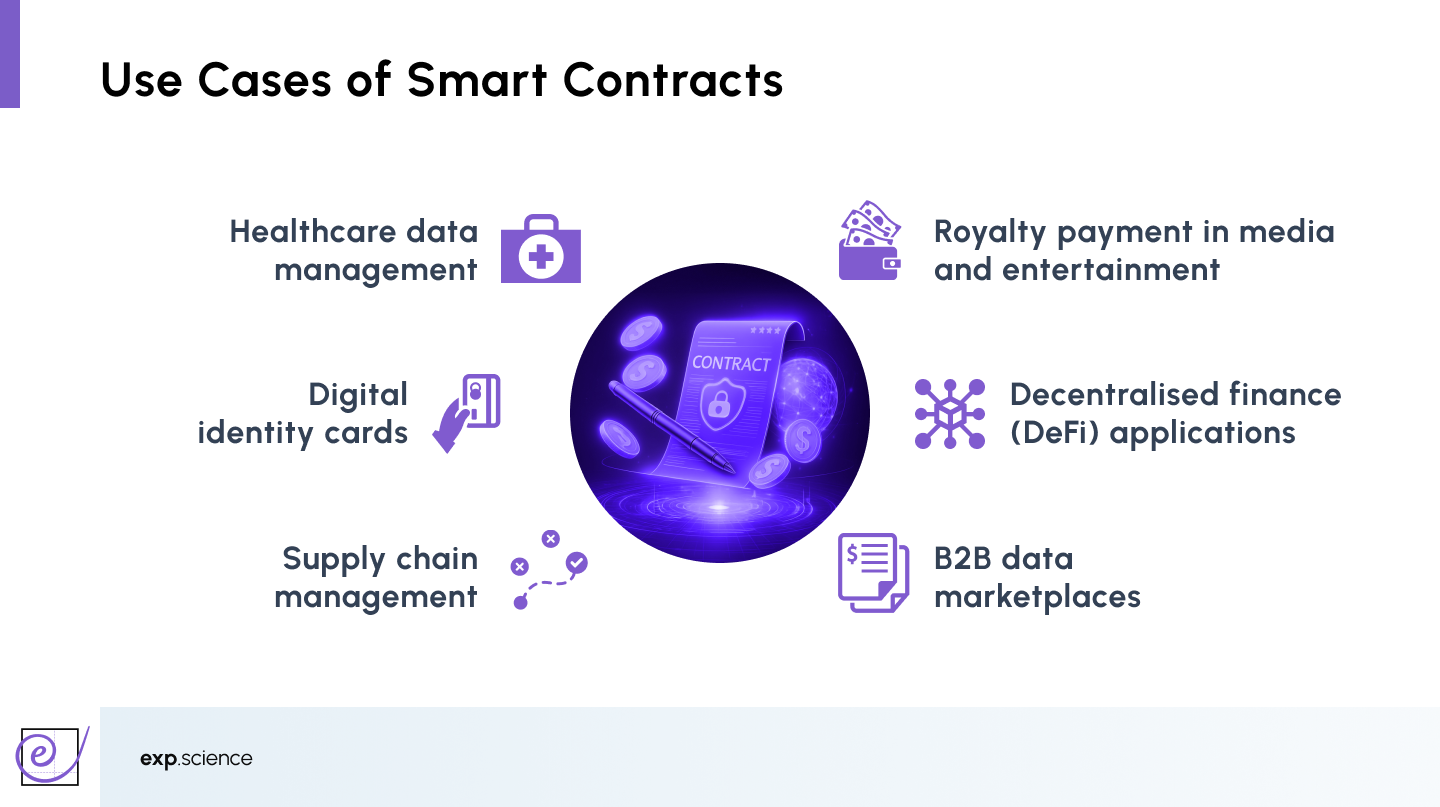
Smart contracts have evolved far beyond their initial experimental phase, now powering a wide range of real-world applications across industries. Key use cases include:
- Decentralised Finance (DeFi):
- Automates lending, borrowing, and trading without intermediaries.
- Platforms such as Compound, Aave, and Uniswap enable peer-to-peer financial services.
- Yield farming allows users to earn returns by providing liquidity.
- Automates lending, borrowing, and trading without intermediaries.
- Insurance:
- Parametric smart contracts automatically pay out claims when specific conditions are met.
- Example: Crop insurance triggered by drought data, reducing payout times from weeks to minutes.
- Parametric smart contracts automatically pay out claims when specific conditions are met.
- Renewable Energy (on Hedera):
- Smart contracts automatically issue and settle green certificates.
- Supports transparent and efficient renewable energy markets aligned with climate goals.
- Smart contracts automatically issue and settle green certificates.
- Supply Chain Management:
- Tracks products through supply chains using blockchain verification.
- Automates payments upon delivery and improves transparency.
- Used by companies like Hyundai and Kia for sustainability reporting.
- Tracks products through supply chains using blockchain verification.
- Gaming and Digital Collectables (NFTs):
- Smart contracts define ownership, royalties, and transfers of unique digital assets.
- Power games and platforms such as CryptoKitties and Axie Infinity.
- Smart contracts define ownership, royalties, and transfers of unique digital assets.
- Real Estate:
- Automates rent collection, property transfers, and fractional ownership.
- Faces regulatory challenges integrating with traditional legal systems.
- Automates rent collection, property transfers, and fractional ownership.
- Prediction Markets:
- Platforms like Augur enable decentralised wagering on future events.
- Provide market-driven insights without traditional intermediaries.
- Platforms like Augur enable decentralised wagering on future events.
- Governance (DAOs):
- Smart contracts automate decision-making, fund management, and collective coordination.
- Enable decentralised organisations to operate without hierarchical corporate structures.
- Smart contracts automate decision-making, fund management, and collective coordination.
Challenges and Limitations
Despite their potential, smart contracts face challenges that limit their current adoption and effectiveness. Security remains the most pressing concern since, once deployed, smart contracts are immutable and often manage significant financial value. This combination creates highly attractive targets for hackers. The Bybit hack of 2025 was the largest crypto theft in history, with $1.5 billion of customer funds being stolen. It involved multiple attack points, including a smart contract vulnerability.
The infamous DAO hack of 2016 also exploited a vulnerability in a smart contract to steal $50 million worth of Ethereum, which demonstrated the catastrophic potential of smart contract bugs and resulted in a highly controversial hard fork of the network. More recently, numerous DeFi protocols have suffered smart contract exploits, resulting in hundreds of millions of dollars in losses.
The challenge of smart contract security is compounded by the relative immaturity of development tools and best practices. Unlike traditional software development, where bugs can often be patched after deployment, smart contract bugs typically cannot be fixed without complex upgrade mechanisms that may introduce their own vulnerabilities. This has led to a more conservative approach to smart contract development, but security incidents continue to occur regularly.
Smart contracts represent a paradigm change in how we think about agreements, trust, and automation in the digital age. From Nick Szabo's original vision in 1994 to today's complex DeFi protocols, smart contracts have evolved from a theoretical concept to a practical technology with real-world applications managing billions of dollars in value.
Smart contracts propose a world where mathematical certainty replaces trust, where code becomes law, and where global, permissionless access to sophisticated financial services becomes possible. Whether this vision fully materialises remains to be seen, but the progress made in the past decade suggests that smart contracts will play an increasingly important role in our digital economy.

.webp)

.jpg)


